


How Does Jawline Filler Interact With Facial Anatomy?
- dynaichealth69
- 2 days ago
- 4 min read

Understanding how Jawline Filler interacts with facial anatomy is important for anyone considering facial contouring. For readers exploring Jawline Filler Dubai, Dynamic Clinic in Dubai provides an example of how treatment planning can be based on individual facial structure. The procedure focuses on strategic placement within specific areas of the lower face rather than simply adding volume along the jaw.
What Structures Define the Jawline?
The appearance of the jawline is influenced by several anatomical features working together. These include the mandible, surrounding muscles, connective tissues, fat compartments, and the overlying skin.
The mandible, or lower jawbone, provides the primary structural framework. Its shape determines the natural width and projection of the lower face. However, the visible jawline is also affected by soft tissue thickness and the position of nearby muscles.
Important anatomical factors include:
Mandibular body: Forms much of the horizontal jawline.
Mandibular angle: Creates the transition between the jaw and lower face.
Chin structure: Influences overall lower-face balance.
Masseter muscle: Contributes to the width and shape of the lower face.
Subcutaneous tissue: Covers the underlying structures and affects definition.
Skin elasticity: Influences how sharply the jawline appears.
Because these structures differ from person to person, the same filler approach may not produce identical results in different faces.
How Does Filler Create Jawline Definition?
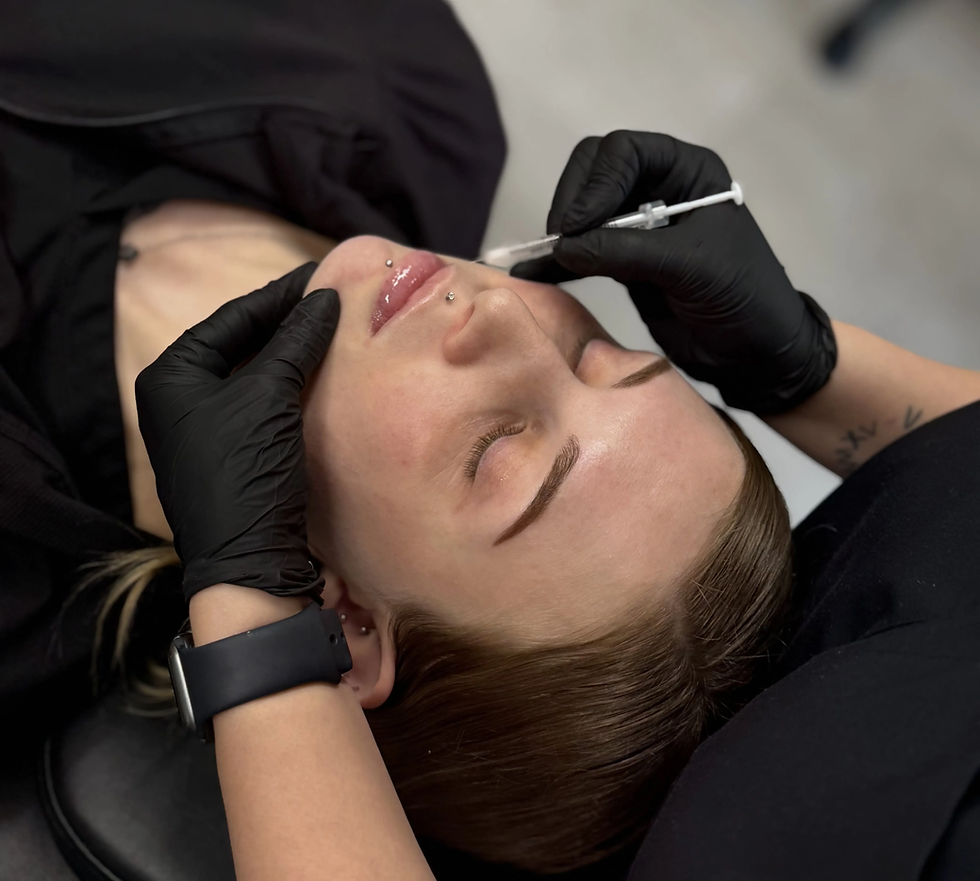
Jawline filler generally works by adding carefully controlled volume to selected areas of the lower face. Dermal fillers commonly contain hyaluronic acid, a substance that can provide volume and structural support within soft tissue.
Rather than changing the jawbone itself, filler can visually enhance the contours surrounding it. Strategic placement may help create a clearer transition between the chin, jawline, and lower cheek.
The anatomical goal can vary depending on the individual's facial proportions. Some people may require greater emphasis near the mandibular angle, while others may benefit from subtle definition along the body of the mandible or around the chin.
Why Is Facial Proportion Important?
Facial anatomy is three-dimensional, so jawline enhancement cannot be considered separately from the rest of the face. The chin, cheeks, lips, nose, and forehead all contribute to perceived facial balance.
A stronger-looking jawline may appear disproportionate if it does not complement the chin or midface. For this reason, treatment planning often considers the facial thirds, symmetry, profile, and natural width of the lower face.
A useful assessment may consider:
Front-facing proportions to evaluate width and symmetry.
Side-profile anatomy to assess projection and contour.
Chin-to-jaw relationship to determine lower-face balance.
Existing soft-tissue volume to understand how filler may interact with facial contours.
Skin characteristics to determine how the tissue may accommodate added volume.
How Do Muscles Affect Jawline Filler?
The muscles around the jaw can influence both facial shape and treatment planning. The masseter muscle, located near the angle of the jaw, is particularly important because its size can affect lower-face width.
Facial movement also means that injected material exists within a dynamic anatomical environment. The surrounding soft tissues can shift during speaking, chewing, and other normal facial movements.
This makes anatomical knowledge essential when determining where and how much filler should be placed. Excessive or poorly positioned volume may alter natural proportions rather than create a refined contour.
Does Jawline Filler Change the Jawbone?
No. Jawline filler does not reshape or modify the underlying jawbone. Instead, it adds volume to selected soft-tissue areas to influence the visible contour of the lower face.
This distinction is important when comparing dermal filler with surgical procedures that physically alter bone structure. Filler provides a soft-tissue approach to contouring, while the underlying mandibular anatomy remains unchanged.
What Role Does Skin and Soft Tissue Play?
The skin and subcutaneous tissues form the outer layer through which the jawline is seen. Their thickness, elasticity, and distribution can affect how clearly the underlying mandibular border is visible.
For example, a person with more soft-tissue coverage around the lower face may naturally have a softer jawline than someone with less tissue in the same region. Age-related changes in skin elasticity and facial volume can also influence lower-face contours.
These factors help explain why jawline enhancement requires individualized assessment rather than a standard injection pattern.
Key Anatomical Considerations
Before treatment, several elements can influence how filler interacts with the face:
Natural jaw width and mandibular shape
Chin projection and position
Facial symmetry
Masseter muscle size
Existing soft-tissue volume
Skin elasticity
Overall facial proportions
Desired degree of contour definition
Understanding these variables supports a more anatomy-based approach to facial contouring.
Is Jawline Filler Suitable for Every Facial Shape?
Jawline filler may be considered for different facial shapes, but suitability depends on individual anatomy, aesthetic goals, and overall facial proportions. A person with a naturally narrow lower face may require a different approach from someone with a broad or angular jaw.
A qualified aesthetic professional should assess facial anatomy, medical history, existing treatments, and expectations before recommending dermal filler. Proper assessment is also important for identifying situations where another treatment approach may be more appropriate.
Frequently Asked Questions
Does Jawline Filler Affect Facial Muscles?
Jawline filler is placed within soft-tissue areas rather than being intended to alter the normal function of facial muscles. However, the surrounding anatomy is considered during treatment planning because muscles contribute to facial shape and movement.
Does Jawline Filler Change Facial Proportions?
It can influence the appearance of facial proportions by adding volume and definition to selected areas. The underlying bones are not changed by the filler itself.
How Long Does Jawline Filler Stay in the Face?
The duration varies according to the filler used, injection area, individual metabolism, facial movement, and other biological factors. Follow-up assessment can help determine how the treated area is responding over time.
Can Jawline Filler Make the Face Look More Defined?
Strategically placed filler can enhance the visible distinction between the jawline, chin, and surrounding facial areas. The degree of definition depends on existing anatomy and the amount and placement of product used.
Conclusion
Jawline filler interacts primarily with the soft tissues surrounding the lower facial framework rather than changing the jawbone itself. Its visible effect depends on the relationship between the mandible, chin, muscles, fat compartments, skin, and overall facial proportions. Understanding these anatomical relationships helps explain why individualized assessment is central to achieving balanced jawline definition.


Comments